There is a question that does not get asked nearly enough in the life of the modern believer. It is not a complicated question. It does not require a theology degree or decades of church experience to understand. But it may be the most disruptive question you encounter this week: What does God actually want?
Not what feels right to you. Not what tradition handed down. Not what fits neatly into your Sunday morning routine. What does God want?
John Piper once wrote that authentic worship is not determined by what feels right to us. It is determined by what is true about God. That single sentence has the power to rearrange everything we think we know about how we engage with the Creator of the universe. Because if worship is not primarily about our comfort, our preferences, or our emotional experience, then something fundamental has to shift in the way we approach it.
Worth-Ship: What Worship Actually Means
The word worship finds its roots in the concept of worth-ship, the act of ascribing worth to something. And here is the sobering reality: everyone worships. Take an honest inventory of your week and ask yourself where your deepest affections are aimed. Whatever receives the consistent weight of your attention, your energy, and your devotion is receiving your worship. The question is never whether you will worship. The question is always what you will worship and whether that worship is aimed correctly.
Worship and love are inseparable. How we love God is a direct reflection of how we know him. And God's deepest desire is to be known. He does not want admirers from a distance. He wants people who have moved from knowing about him to actually knowing him. That transition, from singing about God to singing to God, from religious routine to genuine relationship, is where authentic worship begins.
The Cart and the Correction
The ancient account of Israel attempting to transport the Ark of the Covenant carries more relevance for the modern believer than it might first appear. In 1 Chronicles 13, the people were passionate. They were excited. They loaded the ark onto a cart and celebrated with music and enthusiasm. But their approach was wrong, and the consequences were devastating. Their sincerity did not protect them from the reality that sincerity alone is not enough. You can be genuinely, deeply sincere and still be wrong.
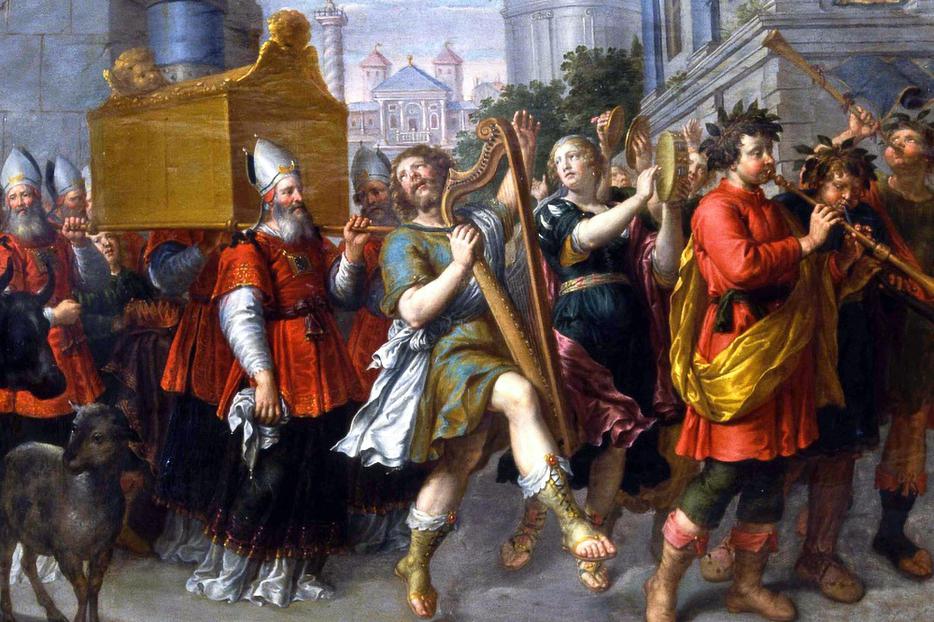
By the time 1 Chronicles 15 arrives, something has changed. The approach is different. There is preparation. There is consecration. There is an intentional alignment with what God actually instructed. The Levites carry the ark on their shoulders with poles, exactly as God had commanded through Moses. The passion is still present, but now it is paired with obedience. And that combination changes everything.
The lesson is not that passion is dangerous. It is that passion without obedience is incomplete. God was never asking Israel to be less enthusiastic. He was asking them to channel that enthusiasm through submission to his order.
Consecration Before Celebration
One of the most striking elements of 1 Chronicles 15 is the call to consecrate, to set oneself apart, to prepare before approaching the presence of God. This stands in sharp contrast to the casual, spontaneous approach of chapter 13. Before the Levites touch the ark, they prepare themselves.
What would it look like to bring that kind of intentionality into your own worship life? Not as a rigid formula, but as a genuine posture of the heart that says, what I am about to engage in matters deeply, and I want to approach it with everything I have.
Paul reminds the church in Corinth in 1 Corinthians 6:19 that the body of believers is the temple of the Holy Spirit. So much energy is spent asking God to move in a room, in a service, in a building. But the deeper invitation is to ask God to move in you. That is consecration. That is the living sacrifice described in Romans 12:1, where worship is not merely what comes out of your mouth but what you give over to God entirely.
The Veil Is Torn
There is a profound architectural reality built into the design of the ancient tabernacle and temple. Worship moved progressively inward, from the outer courts of thanksgiving and praise, through the inner courts, all the way to the Holy of Holies, the innermost place of God's presence. In the old covenant, only the high priest could enter that innermost place, and even then only once a year, with great care and preparation.
But when Christ died, the veil separating the inner court from the Holy of Holies was torn from top to bottom, as described in Matthew 27:51. That tearing was not incidental. It was the entire point. Jesus purchased access to the deepest place of God's presence for every believer. The question that must follow is this: why would we stop short?
So much of modern worship never moves beyond the outer court. Gratitude for salvation is beautiful and right. But God is beckoning his people further in. He is inviting a depth of communion that goes beyond thanksgiving into genuine encounter with his face.
The Cost and the Joy
Authentic worship is costly. The woman who broke an alabaster jar of expensive perfume and poured it over Jesus' feet, described in Luke 7, did not calculate the loss. She gave extravagantly because she understood the worth of the one she was honoring. The man in Matthew 13 who found treasure in a field sold everything he had to obtain it, not reluctantly but joyfully, because he understood what he was gaining.
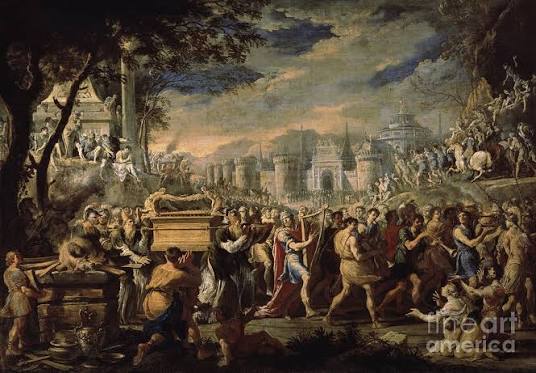
When Israel finally carried the ark into Jerusalem the right way, the celebration that erupted was unlike anything they had experienced before. David danced. The people shouted. Joy returned. And it returned not despite the correction and the cost, but because of it. Obedience had created the space for authentic joy to break through.
That is the promise waiting on the other side of surrendered worship. Not a quieter life, but a more surrendered one. Not less passion, but passion rightly aimed. Not the worship you prefer, but the worship that honors a God who is worthy of everything you have.
The veil is torn. The way is open. The only question remaining is whether you will go all the way in.